


Our companion animal’s coat colors, once only the concern of breeders, have now become the focus of research for other characteristics, including behavior. You may have heard reports that white coat color has been linked to deafness in both dogs and cats. Others have suggested a connection between coat color and aggressive behavior in some dog breeds. Now there’s some evidence of an association between feline behavior and coat color. But is there really anything substantial to this claim?
First, how do cats get their color? Coat-color pattern genes fall into four categories that control spotting, pigment intensity, orange and agouti color switching, and even patterns. Located on the X chromosome, several sex-linked genes are responsible for controlling fur color, such as orange and black. Female cats whose XX sex chromosomes have a genetic predisposition to orange and black fur display a patchwork coat, yielding what are commonly known as tortoiseshell coloring (affectionately referred to as “torties”). Other varieties of this include torbies (tortoiseshell tabbies) and calico mosaics. Male cats can have these coat colors, but only if they are an XXY, which makes male calicos and tortoiseshells extremely rare.
Researchers have also studied whether behavior can be inherited in the cat as well. A series of studies conducted in the 1980s to the 1990s showed that cats inherit some levels of sociability from their fathers. They noted that certain aspects of a kitten’s personality remain relatively constant throughout the first few years of life, suggesting a genetic predisposition to personality (Lowe and Bradshaw, 2001). Type of cat breed influences differences in interactions with humans, for example, Siamese cats are more demanding and vocal toward their pet parents when compared with other breeds (Turner and Bateson, 2000).
There are lots of reports about what cat lovers think about the behavior of their cats and how that relates to coat color. Orange cats are thought to be friendly (Delgado et al, 2012), some perceive black cats to be wild and unpredictable (Huntingford, 2009), and still others claim that tortoiseshells have a combination of stubbornness, independence, and unpredictability (Delgado, Munera, Reevy, 2012). Way back in 1895, veterinarians were quoted as saying torties were ‘not overly affectionate, sometimes even sinister, and most ill-tempered in disposition’ (Huidekoper, 1895). How rude!

Certainly, there are anecdotal reports of tortoiseshells and calicos being rather . . . shall we say . . . feisty, inspiring personality descriptors like ‘tortitude’ and ‘calico crazies’. However, due to the lack of actual research in this area, veterinary behaviorist Elizabeth Stelow and her team of researchers set out to determine whether coat-color can be truly linked to behavior in cats. The four-month survey disguised the fact that coat color was the primary subject, to avoid bias on the part of the responders. Over 1,400 pet parents filled out the survey, and the results just might surprise you!
Pet parents of kitties reported tortoiseshells, calicos, “torbies”, as well as black-and-white and gray-and-white cats, acted more frequently aggressive toward humans in three settings: during everyday interactions, during handling, and during veterinary visits. The researchers were surprised that gray-and-white and black-and-white cats were reported as more aggressive in these settings.
But keep in mind . . . the behaviorists did not independently observe any cats themselves, so the study was completely reliant on the self-reporting of the cats’ guardians. Furthermore, the respondents were people who might have had preconceived notions about their cat’s behavior. This factor could skew the results for the tortie or calico cats, but what about grey-and-white or black-and-white cats?

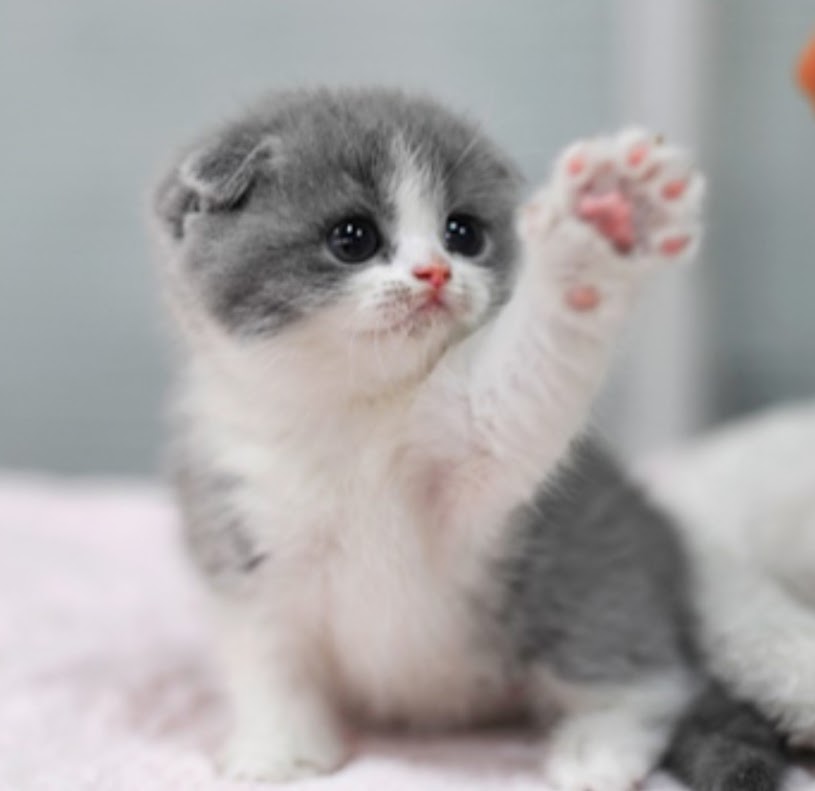
The study concluded that coat colors may be associated with aggressive behaviors in the cat but that the differences are actually relatively minor. These findings support some common assumptions about personalities associated with different cat color patterns, and can help people better understand their feline companions. Researchers also concluded that the subtlety of the results of this study suggests the need for additional research on the topic of the relationship between coat color and behavior. Anyone considering adopting a pet should pay attention to the behavior of each individual cat they meet, rather than making decisions about cats based on the coat color. I suppose one could honestly say, never judge a book by its color!
Regardless of your cat's coat color, feed them the best . . . natural, never-recalled premium cat food from Life's Abundance . . . delivered fresh to your door!
www.PremiumPetFoodStore.com
* * * * * * * *
Article References
Elizabeth A. Stelow, Melissa J. Bain & Philip H. Kass (2015): The Relationship Between Coat Color and Aggressive Behaviors in the Domestic Cat, Journal of Applied Animal Welfare Science, DOI: 10.1080/10888705.2015.1081820
Amat, M., de la Torre, J. L. R., Fatjó, J., Mariotti, V. M., Van Wijk, S., & Manteca, X. (2009). Potential risk factors associated with feline behaviour problems. Applied Animal Behaviour Science, 121, 134–139.
Amat, M., Manteca, X., Mariotti, V. M., de la Torre, J. L. R., & Fatjó, J. (2009). Aggressive behavior in the English cocker spaniel. Journal of Veterinary Behavior: Clinical Applications and Research, 4, 111–117.
Bateson, W. (1894). Materials for the study of variation, treated with especial regard to discontinuity in the origin of species. London, England: MacMillan.
Becker, M. (2012). Is there a connection between markings and personality in cats? Retrieved from vetstreet.com/dr-marty-becker/is-there-a-connection-between-markings-and-personality-in-cats.
Dantas-Divers, L. M. S. (2011). Questions about coat color and aggression in cats (author response). Journal of the American Veterinary Medical Association, 239, 1288–1289.
Delgado, M. M., Munera, J. D., & Reevy, G. M. (2012). Human perceptions of coat color as an indicator of domestic cat personality. Anthrozoös, 25, 427–440.
Huidekoper, R. S. (1895). The cat: A guide to the classification and varieties of cats and a short treatise upon their care, diseases, and treatment. New York, NY: D. Appleton.
Huntingford, J. (2009). The color of a cat can determine their personality. Retrieved from petwellbeing.com/ blog/the-color-of-a-cat-can-determine-their-personality.
Kim, Y. K., Lee, S. S., Oh, S. I., Kim, J. S., Suh, E. H., Houpt, K. A. ... Yeon, S. C. (2010). Behavioural reactivity of the Korean native Jindo dog varies with coat colour. Behavioural Processes, 84, 568–572.
Kogan, L. R., Schoenfeld-Tacher, R., & Hellyer, P. W. (2013). Cats in animal shelters: Exploring the common perception that black cats take longer to adopt. Open Veterinary Science Journal, 7, 18–22.
Lowe, S. E., & Bradshaw, J. W. S. (2001). Ontogeny of individuality in the domestic cat in the home environment. Animal Behaviour, 61, 231–237.
McCune, S. (1995). The impact of paternity and early socialisation on the development of cats’ behaviour to people and novel objects. Applied Animal Behaviour Science, 45, 109–124.
Meier, M., & Turner, D. C. (1985). Reactions of house cats during encounters with a strange person: Evidence for two personality types. Journal of the Delta Society, 2, 45–53.
Podberscek, A. L., & Serpell, J. A. (1996). The English cocker spaniel: Preliminary findings on aggressive behaviour. Applied Animal Behaviour Science, 47, 75–89.
Reisner, I. R., Houpt, K. A., Erb, H. N., & Quimby, F. W. (1994). Friendliness to humans and defensive aggression in cats: The influence of handling and paternity. Physiology & Behavior, 55, 1119–1124.
Webb, A. A., & Cullen, C. L. (2010). Coat color and coat color pattern-related neurologic and neuro-ophthalmic diseases. Canadian Veterinary Journal, 51, 653–657.


