Showing posts with label Animal Scents Essential Oils. Show all posts

Tuesday, October 20, 2015

A Closer Look at Pet Anxiety & How to Treat It Holistically!


As pet parents, we are all vaguely aware that we should minimize the stress our pet kids experience. As a holistic pet consultant, I think it is important that we also comprehend the health risks of prolonged anxiety, too. The fact is, living in a fearful or anxious state for long periods of time can take a dramatic toll on the health of a companion animal.
Any time your pet feels endangered, whether the threat is real or imagined, the body prepares to defend itself by unleashing a torrent of stress hormones, including cortisol and adrenaline, that have far-reaching effects on the whole body. These hormones release energy, increasing respiration while inhibiting digestion, the immune system, growth, reproduction and even pain perception. These hormones also decrease blood flow to areas of the body that are necessary for movement. This is appropriate for survival in a real crisis, but when fear, anxiety or stress continues chronically, negative health effects are a real possibility. These effects could include fatigue, hypertension, gastrointestinal problems, skin disease, as well as metabolic and immune problems. You might be surprised to know that pets can manifest many of the same conditions that we do!
Chronic anxiety and stress can even cause permanent damage to the brain. We know that animals staying in shelter facilities are at increased susceptibility to infectious diseases, including upper respiratory tract infections, litterbox problems, hair loss, and bladder inflammation. And that’s nothing compared to the extreme duress of prolonged fear experienced by dogs in puppy mills! We can see the effects of stress on dogs when they exhibit signs of stress colitis, an inflammatory GI condition that causes diarrhea - often seen after boarding, veterinary visits, or grooming. Stressed dogs suffering from separation anxiety can also be destructive, chewing carpet, baseboards, or scratching up doors. Dogs that are chronically stressed can lick themselves raw, creating skin conditions like lick granulomas.
Apart from the mental and physical distress, stress hormones also imprint any fearful situation firmly in your pet’s memory as something that was scary and life-threatening. These feelings can be recalled from something as seemingly innocuous as pinpricks from a vaccine needle, a person wearing a lab coat or the sight of nail clippers. Any memory of frightening situations can prove to be a powerful fear stimulus. When your companion animal encounters a similar sort of situation, the stress hormones are released and the fear cycle resumes all over again.
The effects of fear and anxiety can be profound and highly distressing. We need to recognize fear in our pets, do more to decrease their fear when possible, and prevent fear by associating potentially fearful situations with positive stimuli. As you can see, dogs and cats who demonstrate pathologic levels of fear or anxiety need our help, not only for their emotional well-being but their physical well-being, too!

Ask us about using 100% pure, therapeutic-grade essential oils formulated specifically for animals in our Animal Scents collection. Log onto:

www.NaturalLivingEssentialOils.com 

and search Product Categories for "Pets" to see our line of essential oils and essential oil- infused pet products. 


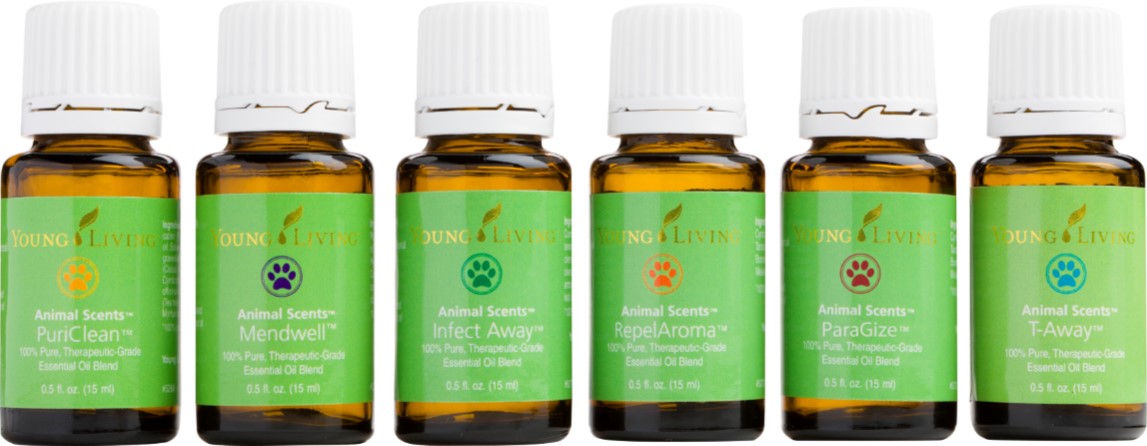
Animal Scents Care Collection (sold individually)


Individual Oils from the Animal Scents Care Collection


Tuesday, June 9, 2015

Essential Oils and Pets: A Quick How-To


If you love using Young Living products in your home, you’ve probably wondered how you can share their amazing benefits with your animals. Which oils are safe to use? How much can I apply? Should I diffuse or apply topically? 
If you’ve ever had questions like these, we’re here to help! Check out this quick-and-easy how-to guide for using essential oils with animals.* Whether you’re a beginner or an expert, here are a few things to keep in mind: 
Most animals are more sensitive than humans to essential oils.
  • Start by diluting heavily and use in moderation.
  • Every animal is different, so carefully observe how each animal responds to the oils. Use common sense and good judgment as you try different methods.
  • Take special care to not get essential oils in an animal’s eyes.
  • Avoid using high-phenol oils such as Oregano and Thyme with any animals, especially cats.
  • Use special caution when using essential oils with cats. Cats are also generally averse to citrus essential oils.

Pets-Animals and Essential Oils - Young Living

Your animal’s size affects the amount of oil you should use.
  • For smaller animals like cats and small dogs, use 3–5 drops. Be sure to dilute 80–90 percent prior to application (for example, for every 1 drop of oil, use 4–5 drops of a diluting agent, such as V-6™Vegetable Oil Complex).
  • For larger animals, like large dogs, start with 3–5 drops. Unless otherwise indicated on the product label, dilution is unnecessary.
  • For very large animals, like horses and cattle, start with 10 drops. Unless otherwise indicated on the product label, dilution is unnecessary.

Apply oils to yourself or diffuse to introduce animals to essential oils and help them get comfortable.
  • Wear oils around your animals, diffuse in their space, or apply to your hands and let the animal smell them.
  • If your animal is jittery or resistant to essential oils, try applying an oil to yourself and staying near the animal for several minutes so it can get used to the aroma.

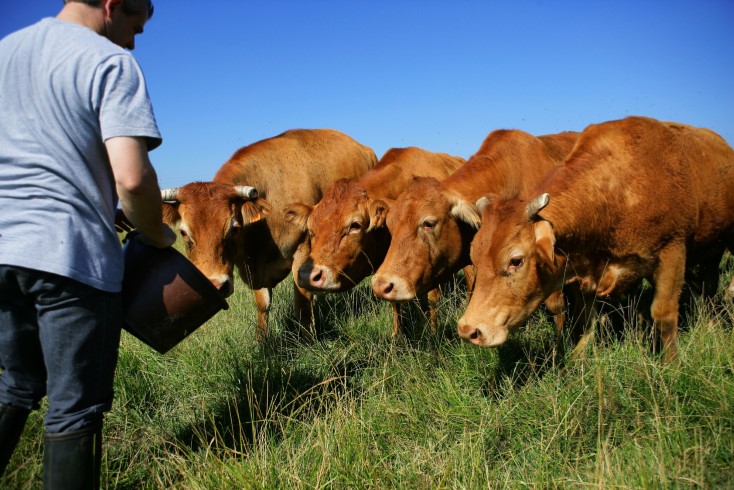
Cattle

Once they’re used to essential oils, animals can respond well to topical application.
  • For cats and dogs, paws are a great place to apply essential oils.
  • For hoofed animals, we recommend application on the spine or flanks.
  • Try rubbing oils onto your own hands and then stroking the animal’s fur.
  • For large or hard-to-reach areas, combine essential oils with V-6 Vegetable Oil Complex or water in a spray bottle for easier application.
  • Animal Scents™ Ointment can be used to seal and protect areas where essential oils have been applied topically.

Essential oils can be administered internally.
  • Some essential oils can be mixed with your animal’s food.
  • For large animals, you can pull out the bottom lip and drop oils directly into the mouth.

Young Living offers a full line of animal-specific products.

AnimalScents Oils - Young Living

*If your pet or animal has a known health issue, please consult your veterinarian before administering essential oils.

Get started on your amazing essential oils journey at: