Showing posts with label Dogs. Show all posts

Tuesday, October 20, 2015

A Closer Look at Pet Anxiety & How to Treat It Holistically!


As pet parents, we are all vaguely aware that we should minimize the stress our pet kids experience. As a holistic pet consultant, I think it is important that we also comprehend the health risks of prolonged anxiety, too. The fact is, living in a fearful or anxious state for long periods of time can take a dramatic toll on the health of a companion animal.
Any time your pet feels endangered, whether the threat is real or imagined, the body prepares to defend itself by unleashing a torrent of stress hormones, including cortisol and adrenaline, that have far-reaching effects on the whole body. These hormones release energy, increasing respiration while inhibiting digestion, the immune system, growth, reproduction and even pain perception. These hormones also decrease blood flow to areas of the body that are necessary for movement. This is appropriate for survival in a real crisis, but when fear, anxiety or stress continues chronically, negative health effects are a real possibility. These effects could include fatigue, hypertension, gastrointestinal problems, skin disease, as well as metabolic and immune problems. You might be surprised to know that pets can manifest many of the same conditions that we do!
Chronic anxiety and stress can even cause permanent damage to the brain. We know that animals staying in shelter facilities are at increased susceptibility to infectious diseases, including upper respiratory tract infections, litterbox problems, hair loss, and bladder inflammation. And that’s nothing compared to the extreme duress of prolonged fear experienced by dogs in puppy mills! We can see the effects of stress on dogs when they exhibit signs of stress colitis, an inflammatory GI condition that causes diarrhea - often seen after boarding, veterinary visits, or grooming. Stressed dogs suffering from separation anxiety can also be destructive, chewing carpet, baseboards, or scratching up doors. Dogs that are chronically stressed can lick themselves raw, creating skin conditions like lick granulomas.
Apart from the mental and physical distress, stress hormones also imprint any fearful situation firmly in your pet’s memory as something that was scary and life-threatening. These feelings can be recalled from something as seemingly innocuous as pinpricks from a vaccine needle, a person wearing a lab coat or the sight of nail clippers. Any memory of frightening situations can prove to be a powerful fear stimulus. When your companion animal encounters a similar sort of situation, the stress hormones are released and the fear cycle resumes all over again.
The effects of fear and anxiety can be profound and highly distressing. We need to recognize fear in our pets, do more to decrease their fear when possible, and prevent fear by associating potentially fearful situations with positive stimuli. As you can see, dogs and cats who demonstrate pathologic levels of fear or anxiety need our help, not only for their emotional well-being but their physical well-being, too!

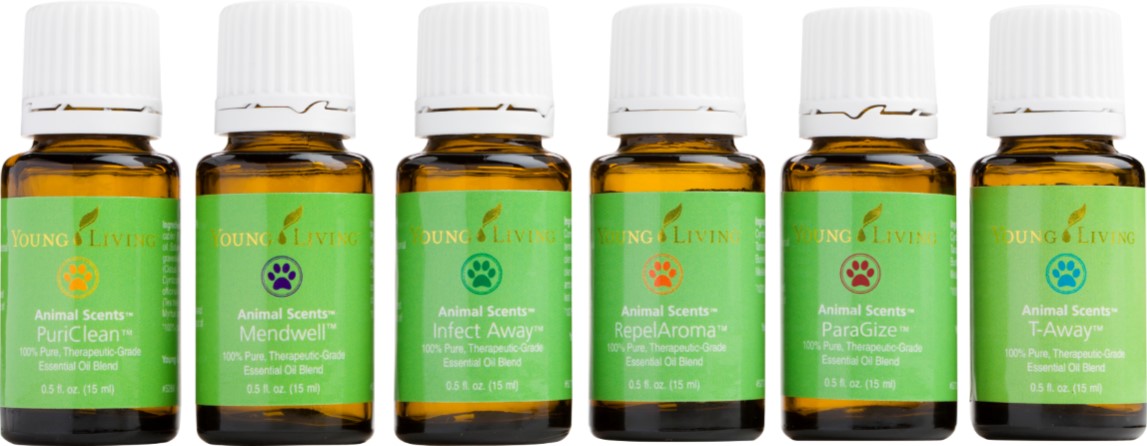
Ask us about using 100% pure, therapeutic-grade essential oils formulated specifically for animals in our Animal Scents collection. Log onto:

www.NaturalLivingEssentialOils.com 

and search Product Categories for "Pets" to see our line of essential oils and essential oil- infused pet products. 


Animal Scents Care Collection (sold individually)


Individual Oils from the Animal Scents Care Collection


Tuesday, June 9, 2015

Essential Oils and Pets: A Quick How-To


If you love using Young Living products in your home, you’ve probably wondered how you can share their amazing benefits with your animals. Which oils are safe to use? How much can I apply? Should I diffuse or apply topically? 
If you’ve ever had questions like these, we’re here to help! Check out this quick-and-easy how-to guide for using essential oils with animals.* Whether you’re a beginner or an expert, here are a few things to keep in mind: 
Most animals are more sensitive than humans to essential oils.
  • Start by diluting heavily and use in moderation.
  • Every animal is different, so carefully observe how each animal responds to the oils. Use common sense and good judgment as you try different methods.
  • Take special care to not get essential oils in an animal’s eyes.
  • Avoid using high-phenol oils such as Oregano and Thyme with any animals, especially cats.
  • Use special caution when using essential oils with cats. Cats are also generally averse to citrus essential oils.

Pets-Animals and Essential Oils - Young Living

Your animal’s size affects the amount of oil you should use.
  • For smaller animals like cats and small dogs, use 3–5 drops. Be sure to dilute 80–90 percent prior to application (for example, for every 1 drop of oil, use 4–5 drops of a diluting agent, such as V-6Vegetable Oil Complex).
  • For larger animals, like large dogs, start with 3–5 drops. Unless otherwise indicated on the product label, dilution is unnecessary.
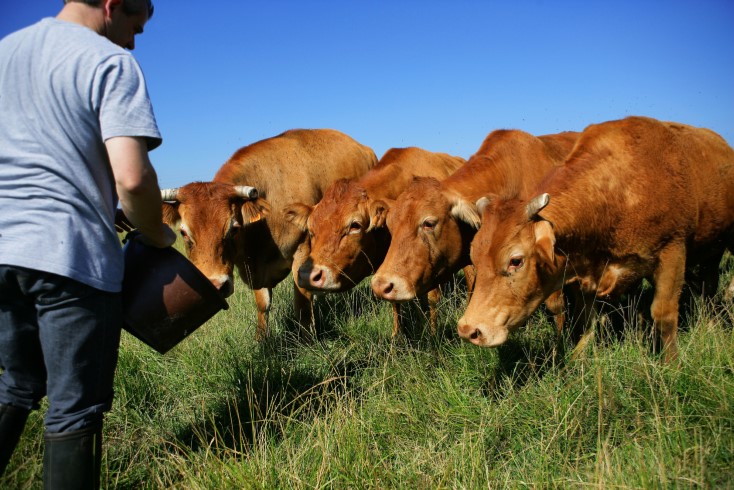
  • For very large animals, like horses and cattle, start with 10 drops. Unless otherwise indicated on the product label, dilution is unnecessary.

Apply oils to yourself or diffuse to introduce animals to essential oils and help them get comfortable.
  • Wear oils around your animals, diffuse in their space, or apply to your hands and let the animal smell them.
  • If your animal is jittery or resistant to essential oils, try applying an oil to yourself and staying near the animal for several minutes so it can get used to the aroma.

Cattle

Once they’re used to essential oils, animals can respond well to topical application.
  • For cats and dogs, paws are a great place to apply essential oils.
  • For hoofed animals, we recommend application on the spine or flanks.
  • Try rubbing oils onto your own hands and then stroking the animal’s fur.
  • For large or hard-to-reach areas, combine essential oils with V-6 Vegetable Oil Complex or water in a spray bottle for easier application.
  • Animal Scents Ointment can be used to seal and protect areas where essential oils have been applied topically.

Essential oils can be administered internally.
  • Some essential oils can be mixed with your animal’s food.
  • For large animals, you can pull out the bottom lip and drop oils directly into the mouth.

Young Living offers a full line of animal-specific products.

AnimalScents Oils - Young Living

*If your pet or animal has a known health issue, please consult your veterinarian before administering essential oils.

Get started on your amazing essential oils journey at:


Thursday, April 2, 2015

Dog Weight Issues


Have you noticed that your dog is looking . . . well . . . a little rotund lately? A bit more curvaceous than usual? You’re not alone! Approximately 17 million dogs in the United States are classified as overweight. But just because Fido has lots of company doesn’t mean that he’s in the clear. Extra weight is linked to a variety of health problems, including arthritis, diabetes, heart disease, and high blood pressure.

How to Tell if Your Dog is Overweight ~ You know your dog better than anyone ~ so you’ve likely already noticed if he has gained weight over a relatively short period. But extra bulk is a bit more difficult to recognize if he’s been slowly packing on the pounds over the years. Here are two fail-safe ways to determine if Fido is at the correct weight:


Feel his ribs: Run your hands along his sides toward the tail, feeling for his ribs. If you can find them beneath a thin layer of flesh, he is probably at the correct weight. If you can barely feel them under a layer of fat, he is likely overweight.


View him from the top and side: A visual inspection of your dog’s body is also important. Look at his body from above. Does he have an hourglass shape, with a slight narrowing behind the rib cage? Also view the lines of his body from the side. Does his stomach tuck up behind the rib cage? If the answer to both questions is yes, he’s likely at the correct weight. If his body has no definition from above or from the side, he is probably overweight.


What to do if Your Dog is Overweight:


Take him to the vet: Have a vet examine your dog just to make sure that he isn’t experiencing a health problem. Some conditions, such as thyroid disease and Cushing’s disease, can cause rapid weight gain.


Cut back on meals: It’s quite possible that you’re feeding Fido too much at mealtimes. Often the serving size on commercial dog food labels advises a larger portion than is necessary for an individual dog. Every dog is different, and every dog also metabolizes food differently. With this in mind, start out with the recommended serving size but observe your dog carefully. If he looks like he’s gaining weight, slowly cut back on how much you’re feeding; if he appears to be losing weight, feed slightly more until he’s at the recommended weight for his breed. Then simply maintain the portion size that works for your dog.  You may also want to try feeding a quality, premium Weight Loss Formula for Adult Dogs!


Feed him on a schedule: Dogs who are “free-fed” ~ given access to their food bowls all day ~ are more likely to be overweight than those who eat on a regular schedule. To help keep Fido healthy, schedule his meals at consistent times and take his food bowl away after 10 to 15 minutes.


Provide healthy treats: Supplement correctly portioned meals with healthy, low-calorie treats, such as cut-up veggies, plain popcorn, or other healthy treats. Make sure that you account for the calories in treats when feeding your dog his meals ~ these should be subtracted from his total caloric allowance for the day.  For healthy, natural, never recalled wholesome treats, try Wholesome Hearts Baked Low-Fat Treats for Dogs.


Exercise him: Of course, any diet plan should be accompanied by the proper amount of exercise. Keep your dog active by making sure that he gets a few daily walks and multiple lively play periods ~ but work up to this gradually. An overweight dog won’t be able to sustain this kind of energy level overnight.


Continue to assess your dog’s progress on a monthly basis to be sure that he’s at a healthy weight, and maintain, maintain, maintain when he has reached his goal! A nutritious diet, meals fed on a regular schedule, and exercise will add years to his life. ♥


TIRED OF PET FOOD RECALLS?
Choose Life's Abundance Dog and Cat Food! They have NEVER been recalled and the food is shipped fresh to your door within 4-6 weeks of being made. They have been in business since 1999! Choose a pet food you can trust! This food is only sold online to ensure you receive the freshest food possible. Click Here to order.


Healthypet1
www.PremiumPetFoodStore.com


*   *   *   *   *   *   *   *   

Raven is an engaging entrepreneur who encourages others to celebrate pets as part of the family, as well as keep them happy, healthy, and spoiled with her online specialty pet boutique, premium pet food business, and holistic healing therapies. She is also a professional intuitive, spiritual coach, and holistic healer who works with the Angels, Ascended Masters, Spirit Guides, and Animal Spirit realms when counseling clients, which includes animals and people.

Saturday, March 14, 2015

Top 10 Reasons Why Your Pets Should Take Fish Oil


Fish oil supplements are an ideal complement to your pet’s diet because they supply omega-3 fatty acids, which your dog or cat’s body cannot sufficiently produce on its own. Still in doubt? Here are the top 10 reasons why it’s important to supplement your dog or cat’s daily intake with a quality fish oil supplement.

1. Your Pet Will Burn Fat More Efficiently

The Omega-3 fatty acids in fish oil supplements help improve the metabolism of a dog and cat’s body in a natural way and cause body fat to burn more quickly. (2,10)

2. Improved Development of Puppies & Kittens During Pregnancy

During a pregnancy, supply your canine or feline mama omega-3 needs with a pure, safe fish oil supplement. The reason is because the omega-3 fatty acid DHA helps improve brain development, concentration, immunity and eyesight, among other things. (1,5)

3. Slow Down Your Pet’s Aging Process

We all want to age more slowly, right? EPA and DHA found in fish oil help slow down the aging process by reducing inflammation and extending the longevity of cells. In this way, omega-3s help keep your pet kids feeling younger for longer. (3)

4. Improved Flexibility

Because of the anti-inflammatory properties of EPA from fish oil supplements, the discomfort in your pet’s joints and muscles may actually decrease. What you will notice is that over time, fish oil supplements can help with stiffness to rise and help your pet be more active and enjoy walks and games with you. (4)

5. Improved Performance in Canine Athletes

Omega-3s in fish oil supplements improve the functioning of the lungs. For our active agility dogs, runners, Frisbee dogs, swimmers and mountain hiker companions, fish oil will help your dog keep up with you. (14)

6. Better Concentration & Limiting Brain Cell Deterioration

Thanks to EPA and DHA from fish oil, your pet’s brain may age more slowly and perform optimally. The essential fatty acids in the omega-3s contribute to sounder sleep, an essential element in keeping concentration sharp. (6)

7. Optimized Immune System Functioning

A daily supplement of omega-3s from fish oil supplements help the white blood cells perform their anti-inflammatory function optimally. This helps your pet’s defense against diseases and other ailments by strengthening the immune system. (15)

8. Better Heart Health

The omega-3s in fish oil supplements help keep cholesterol levels at a healthy level and help keep this vital muscle healthy. (8,9)

9. No More Grumpy Cat

Fish oil supplements are proven to improve mood in humans, and studies are forthcoming about their benefits in pets! (12, 13)

10. Healthy Skin & Shiny Coat

The benefits of omega-3s in fish oil supplements for skin health are well documented, but did you know that omega-3s also help protect against sunburn? (6,7)


Adding health-promoting fish oil to your pet’s diet can be one of the best decisions you make for your companion animal. If you want to learn more, visit our website!


References:

1. Zicker SC1, Jewell DE, Yamka RM, Milgram NW. Evaluation of cognitive learning, memory, psychomotor, immunologic, and retinal functions in healthy puppies fed foods fortified with docosahexaenoic acid-rich fish oil from 8 to 52 weeks of age. J Am Vet Med Assoc. 2012 Sep 1;241(5):583-94. doi: 10.2460/javma.241.5.583.

2. Xenoulis PG1, Steiner JM. Lipid metabolism and hyperlipidemia in dogs.Vet J. 2010 Jan;183(1):12-21. doi: 10.1016/j.tvjl.2008.10.011. Epub 2009 Jan 23.

3. Figueras M, Olivan M, Busquets S, López-Soriano FJ, Argilés JM. Effects of eicosapentaenoic acid (EPA) treatment on insulin sensitivity in an animal model of diabetes: improvement of the inflammatory status. Obesity (Silver Spring). 2011 Feb;19(2):362-9. doi: 10.1038/oby.2010.194. Epub 2010 Sep 30.

4. Moreau M, Troncy E, Del Castillo JR, Bédard C, Gauvin D, Lussier B. Effects of feeding a high omega-3 fatty acids diet in dogs with naturally occurring osteoarthritis. J Anim Physiol Anim Nutr (Berl). 2012 Jul 14. doi: 10.1111/j.1439-0396.2012.01325.x

5. Bauer JE, Heinemann KM, Lees GE, Waldron MK. Retinal functions of young dogs are improved and maternal plasma phospholipids are altered with diets containing long-chain n-3 polyunsaturated fatty acids during gestation, lactation, and after weaning. J Nutr. 2006 Jul;136(7 Suppl):1991S-1994S.

6. Bauer JE. Therapeutic use of fish oils in companion animals. J Am Vet Med Assoc. 2011 Dec 1;239(11):1441-51. doi: 10.2460/javma.239.11.1441. Review.

7. Popa I, Pin D, Remoué N, Osta B, Callejon S, Videmont E, Gatto H, Portoukalian J, Haftek M. Analysis of epidermal lipids in normal and atopic dogs, before and after administration of an oral omega-6/omega-3 fatty acid feed supplement. A pilot study. Vet Res Commun. 2011 Dec;35(8):501-9. doi: 10.1007/s11259-011-9493-7. Epub 2011 Jul 23. Erratum in: Vet Res Commun. 2012 Mar;36(1):91

8. Smith CE, Freeman LM, Rush JE, Cunningham SM, Biourge V. Omega-3 fatty acids in Boxer dogs with arrhythmogenic right ventricular cardiomyopathy. J Vet Intern Med. 2007 Mar-Apr;21(2):265-73.

9. Freeman LM, Rush JE, Markwell PJ.Effects of dietary modification in dogs with early chronic valvular disease. J Vet Intern Med. 2006 Sep-Oct;20(5):1116-26.

10. Laflamme DP. Understanding and managing obesity in dogs and cats. Vet Clin North Am Small Anim Pract. 2006 Nov;36(6):1283-95, vii. Review.

11. Brown SA, Brown CA, Crowell WA, Barsanti JA, Allen T, Cowell C, Finco DR. Beneficial effects of chronic administration of dietary omega-3 polyunsaturated fatty acids in dogs with renal insufficiency. J Lab Clin Med. 1998 May;131(5):447-55.

12. Hegarty B, Parker G. Fish oil as a management component for mood disorders - an evolving signal. Curr Opin Psychiatry. 2013 Jan;26(1):33-40. doi: 10.1097/YCO.0b013e32835ab4a7

13. Hegarty BD, Parker GB. Marine omega-3 fatty acids and mood disorders--linking the sea and the soul. 'Food for Thought' I. Acta Psychiatr Scand. 2011 Jul;124(1):42-51. doi: 10.1111/j.1600-0447.2011.01703.x. Epub 2011 Apr 11. Review.

14. Wakshlag J, Shmalberg J. Nutrition for working and service dogs. Vet Clin North Am Small Anim Pract. 2014 Jul;44(4):719-40, vi. doi: 10.1016/j.cvsm.2014.03.008. Review.


15. Hall JA, Henry LR, Jha S, Skinner MM, Jewell DE, Wander RC. Dietary (n-3) fatty acids alter plasma fatty acids and leukotriene B synthesis by stimulated neutrophils from healthy geriatric Beagles. Prostaglandins Leukot Essent Fatty Acids. 2005 Nov;73(5):335-41.


Saturday, June 7, 2014

Essential Oils for Cats


Cats present their own unique controversies and requirements to essential oil use.  Most cat owners would agree that cats have distinct opinions of the world in which they allow us to co-exist, and this certainly holds true for aromatherapy. Cats are likely very proud of the fact that they are indeed the most contested topic in the world of essential oil use.  Human viewpoints of this subject range from the adamant stance that essential oils cannot be used safely for cats, to those who use contraindicated essential oils on a daily basis for their felines.

Essential oils for cats (and other animals) is a highly controversial topic, however it really is an argument that boils down to the quality of the essential oils.  Rest assured that ALL of the oils we recommend for use on your animals have been tested for safety and effectiveness prior to us recommending them to you.  The one factor that we stress is to ONLY use therapeutic grade essential oils, and the only one we recommend is Young Living Essential Oils, as they are tried and true for more than 20 years.

Cats are sensitive to most synthetically made products and "natural products" as well as someessential oils . . . . even if we are not aware of it!  We bring this up as many of us have sensitivities to food, household cleaners, hair and skin products, etc., however we may not recognize it because most of us are just not that tuned into our bodies and our environment. We may only recognize a change when we cease using certain products or stop eating a particular food item.

Have you ever considered the toxicity to your pets when you bomb your home with synthetic air fresheners, household cleaners or carpet cleaners?  Our pets have extremely sensitive noses and much smaller lungs, so subjecting them to breathing in chemicals and other toxic substances can do a lot of damage.

Many health problems today for humans, as well as for pets, can be traced back to toxicity within their environment, whether it's diet, personal care, or household products. 

Thankfully, there is something we can do about it!  Make a commitment to using non-toxic, holistic cleaning supplies, as well as diffusing healthy essential oils in your home and workplace for yourself and for your pets. 

Essential oils are the perfect solution for us and for our animals. Essential oils can replace most toxic medications for cats, dogs, birds, horses and any other living creature.  There are some oils that we cannot use on certain animals, cats included, so please do be careful and please ask us for guidance if you are not sure.  It is better to be safe than sorry, and the reason Healing Oils for Animals exists is to educate folks on the proper usage of essential oils for their pets, as well as for themselves.

Some of the best essential oils for cats include Lavender, Oregano, Thieves and Peace & Calming, however there are many other oils and nutritional products that are also quite effective!  Remember to always use therapeutic grade essential oils from a trusted source, such as Young Living.  There IS a difference, as demonstrated in the graph below.  


Please contact us for more information on Essential Oils for Animals, 
as well as Essential Oils for You!


Saturday, March 22, 2014

Cats Are Different ~ How a Cat's Nutritional Needs are Different from a Dog's


Our wonderful life-supporting planet is home to a remarkably diverse and complex spectrum of living organisms. And although all living things do share some common traits and similar biochemical pathways and cellular functions, there are many notable differences that make each creature stand out from the crowd. So even with the thread of sameness joining all the planets’ life forms, diversity and difference makes us take note of each creature’s uniqueness. Maybe that’s why the cat is America’s favorite housepet . . . cats are different!

This extraordinary four-legged feline has, for all of recorded time, evoked wonder and surprise, superstition and affection, damnation, and deification. From pharaohs to philosophers to paupers, the companionship of and affection for cats has been a result of the cat’s unique ability to make us humans gaze in awe and admiration.

Eons of special environmental circumstances have forced the cat to evolve some interesting and individualized biochemical activities. Let’s take a peek at how unique the cat is inside, in that mysterious universe of liver and kidneys and glands and fluids where a million chemical reactions are going about their biological business in silent obscurity. And to make our little peek at the inner workings of the cat more interesting, let’s contrast a few of the cat’s biological activities to those of our next most favorite companion the dog.

In so many obvious ways, cats look, act, react, and respond differently than dogs. You never see a cat happily wag its tail; a dog’s reflexes are quick, a cat’s reflexes are incredible; dogs are doers, cats are watchers. These differences are easily noted by simple observation. Now let’s explore some of the unseen microscopic world of the cat ~ the invisible world of metabolism and chemistry that is just as real as those traits we can see with our eyes.

To begin with we must get a good grip on two terms . . . carnivore and omnivore. The cat is considered by scientists to be a strict carnivore and the dog is considered to be an omnivore. Both species are in the Class Mammalia and the Order Carnivora, but here’s the difference: The cat cannot sustain its life unless it consumes meat in some form. Dogs, however, are able to survive on plant material alone; they do not have to consume meat. But always keep in mind that dogs do best and by nature are primarily meat-eaters. Just because by definition they are omnivores (can digest and utilize plant and animal food sources) does not mean that plant material alone makes a good source of nutrition for the dog. Far too many dogs have been undernourished by those cheap grain-based dog foods. And grain-based cat foods are even worse!

So a good way to think of it is that cats are carnivores, dogs are omnivores, but they both have evolved as hunters of other animals in keeping with their nature as meat-eaters.

There are numerous chemical substances that are required for a cat to remain alive. These substances, some very complex chemical molecules and some very basic and simple, must be provided along the internal chemical reaction pathways at all times. Like other living plants and animals, the cat can manufacture most of its own required substances within its own body’s chemical factory. For example, Vitamin C is a requirement for life sustaining processes for us Mammalia, and dogs and cats make plenty of their own within their body’s chemical factory ~ the liver. We humans don’t make enough within our body chemical factory . . . so to keep ourselves alive we have to find some Vitamin C already made (preformed) somewhere in our environment, gather or capture it, then eat it. Without the Vitamin C, we would die.

Dogs and cats don’t have to worry about gathering, capturing, and eating other preformed Vitamin C. They don’t care where their next grapefruit will come from because they make all the Vitamin C they need inside their own personal chemical factory.

On the other hand, there are numerous nutrients and chemicals that cats need that they can only acquire if they eat animal-derived tissues. That is, they need to prey on other living creatures that do make the essential chemicals that cats don’t! Out of necessity, the cat has evolved ways to hunt down, capture and eat this prey in order to "borrow" the prey's nutrients.

Outlined below are just a few of the unseen, but still very real biochemical differences between cats and dogs. Look these over, and you will be even more convinced that cats are different!

VITAMIN A ~ Also called retinol, this vitamin is required at the cellular level by both cats and dogs.

Cats ~ Process little or no enzymes that will break down the plant-produced carotenoids. Must eat preformed active Vitamin A (that is, Vitamin A that already has been converted from carotenoids to its active form by some other creature such as a mouse or rabbit). Here’s a good example of why cats are called strict carnivores . . . they need to eat some other animal in order to "borrow" its active Vitamin A!

Dogs ~ Have enzymes in the lining of the intestine that can break down plant carotenoids and convert these into active Vitamin A.


NIACIN ~ An essential B vitamin (essential means must be eaten, can’t be made inside the body’s chemical factory.)

Cats ~ Can obtain Niacin only by eating the preformed vitamin. Cannot convert Tryptophan to niacin.

Dogs ~ Obtain Niacin in two ways. One is by converting a dietary amino acid call Tryptophan into Niacin, and the other way is by eating preformed Niacin.


ARGININE ~ A building block for proteins, it is an amino acid. Arginine is vital to many of the animal’s internal chemical factory’s functions. No Arginine and the entire factory goes on strike!

Cats ~ Are extremely sensitive to even a single meal deficient in Arginine and are unable to make their own Arginine within their chemical factory. Cats need lots of protein, and Arginine is involved in aiding the elimination of the protein waste products so the wastes don’t pollute the whole factory!

Dogs ~ Are not very sensitive to low levels of Arginine in their diets and produce enzymes internally that can aid production of Arginine.


TAURINE ~ An amino acid that is not built into proteins, but is distributed throughout most body tissues. Taurine is important for healthy functioning of the heart, retina, bile fluid and certain aspects of reproduction.

Cats ~ Must eat preformed Taurine. And since it is not found in plant tissues, cats must consume meat to obtain Taurine. Therefore, Taurine is essential in the diets of cats. Here again, meat has to be supplied to the factory so the Taurine can be extracted for its many uses.

Dogs ~ Make their own in their internal chemical factory.


FELININE ~ It is a compound made from a sulfur amino acid (SAA) called Cysteine.

Cats ~ Have a much higher requirement for SAA than other Mammalia and are the only creatures to manufacture the Felinine chemical. Felinine’s role in the overall function of the chemical factory is unknown, but like most factories whose wastes generate offensive odors, any Felinine present in the male cat’s urine alerts the neighbors that the factory is up and runnin’!

Dogs ~ Don’t know and don’t care what this stuff is.

DIETARY PROTEIN 

Cats ~ If fed a perfectly balanced and 100-percent digestible protein in a diet, the cat will use 20 percent of that protein for growth metabolism and 12 percent for maintenance. Here’s any easy way to say it . . . cats need more protein in their diets than dogs do.

Dogs ~ If fed a perfectly balanced and 100-percent digestible protein in a diet, the dog will use 12 percent of that protein for growth metabolism and only 4 percent of that protein for maintenance. Here's an easy way to say this . . . dogs need less protein in their diets than cats.


ARACHIDONIC ACID ~ An essential fatty acid that plays a vital role in fat utilization and energy production.

Cats ~ Cannot make their own Arachidonic Acid even in the presence of adequate linoleic acid. The reason cats can’t make Arachidonic Acid from linoleic acid is because the cat’s chemical factory (liver) contains no delta-6-desaturase enzyme to convert linoleic to Arachidonic. Tell your cat owning friends about this one. Tell them about the cat’s lack of liver delta-6-desaturase enzyme and they will think you’ve got a Ph.D. in biochemistry!

Dogs – Can make their own Arachidonic Acid if they consume enough linoleic acid by eating proper fats. Therefore, we can say that Arachidonic Acid is not an essential fatty acid for dogs.


FASTING AND STARVATION

Cats ~ Do not mobilize fat reserves for energy very efficiently and, in fact, break down non-fatty body tissues for energy. This upsets the internal chemical factory and can lead to a very dangerous feline disorder called hepatic lipidosis. Never put a fat cat on a starvation diet, it might just put the entire factory out of business.

Dogs ~ Can tolerate prolonged fasts and utilize fat reserves for energy.

So, there you have an insight into some of the invisible goings-on in our friend the cat. It should be obvious that a high quality, meat-based diet is imperative to a cat's wellness. There are no vegetarian diets for cats! And, feeding your cat a homemade concoction of meat may be a disaster. Often, the best recourse is to find a good quality meat-based diet for your feline. 

The next time you admire a cat's unique personality and behavior, and watch the way they egocentrically carry themselves for anyone to see, remember . . . hidden beneath that furry skin is another unique and vast universe. There is a veritable chemical cosmos inside your cat that's just as wondrous and magnificent as the cosmos above. You can't see it, but it's there, silently following the rules of nature to sustain our unique and valued feline friends. And it's that complex chemical cosmos, working it's fantastic magic, that prompts us cat lovers to say, truly . . . cats are different!

We love them all equally, which is why we feed them only the best . . . . safe, natural, premium food, treats and supplements!

For more information or to request samples, visit our website at:

www.PremiumPetFoodStore.com


*  *  *  *  *  *  *  *  *  *  *

Raven is an engaging entrepreneur who encourages others to celebrate pets as part of the family, as well as keep them happy, healthy, and spoiled with her online specialty pet boutique (http://www.TheGiftedPet.com), and premium pet food business (http://www.PremiumPetFoodStore.com)


For more information, please visit her Facebook page to PM her (https://www.facebook.com/TheGiftedPet), or email her at Raven@TheGiftedPet.com

Thursday, February 6, 2014

Dog Adoption Checklist


Congratulations on deciding to adopt a dog! You are embarking on a wonderful and rewarding relationship. Because adopting a new dog comes with a lot of change for both dog and dog parent, we’ve compiled a checklist to help make the transition as smooth as possible.

Questions for All Adopters:

* Do you have any other dogs and how will they react to a new dog?

* Is your current residence suited to the dog you’re considering?

* How will your social life or work obligations affect your ability to care for a dog?

* Do you have a plan for your new dog during vacations and/or work travel?

* How do the people you live with feel about having a dog in the house?

* Are you (or your spouse, partner or roommate) intolerant of hair, dirt and other realities of sharing your home with a dog, such as allergies?

* Do you or any of your household/family members have health issues that may be affected by a dog?

* What breed of dog is the best fit with your current lifestyle? (You can find information on specific breeds in Petfinder's dog breed directory.)

* Is there tension in the home? Dogs quickly pick up on stress in the home, and it can exacerbate their health and behavior problems.

* Is there an adult in the family who has agreed to be ultimately responsible for the dog’s care?


Other Considerations:

* What do you expect your dog to contribute to your life? For example, do you want a running and hiking buddy, or is your idea of exercise watching it on TV?

* If you are thinking of adopting a young dog, do you have the time and patience to work with the dog through its adolescence, taking house-breaking, chewing and energy-level into account? (Find more information on raising young dogs in Petfinder's Puppy Guide.)

* Have you considered your lifestyle carefully and determined whether a younger or older dog would be a better match for you?

* Can you train and handle a dog with behavior issues or are you looking for an easy-going friend?

* Do you need a dog who will be reliable with children or one you can take with you when you travel?

* Do you want a dog who follows you all around the house or would you prefer a less clingy, more independent character?

Size Considerations:

* What size dog can your home accommodate?

* Will you have enough room if your dog grows to be bigger than expected?

* What size dog would suit the other people who live in or visit your home regularly?

* Do you have another dog to consider when choosing the size of your next dog?

* How big a dog can you travel comfortably with?

Dog Costs:

* More likely than not, the adopting agency will charge a fee to help defray the cost of taking in unwanted or lost animals. The adoption fee you pay will be a tiny fraction of the money you will spend over the life of your dog.

* You may need to pay for your adopted dog to be spayed or neutered before bringing him or her home.

* Some expenses are mandatory for all dogs, including:
~ Food
~ Routine veterinary care
~ Licensing according to local regulations
~ Collars, leashes and identification tags
~ Basic grooming equipment and supplies.

Other expenditures may not be required but are highly recommended:
~ Permanent identification, such as a microchip or tattoo
~ Training classes
~ Additional grooming supplies or professional grooming (depending on your new dog’s needs)
~ A spare collar or leash
~ A bed and toys
~ A crate or carrier

* Unexpected costs: Accidents and illness can result in costly emergency veterinary care. 
Recovery tools for finding a missing dog can include posters and rewards.

* A dog with special physical or behavioral challenges may require specialized professional support to overcome any obstacles these issues present.

* For more on typical dog care costs visit Annual Dog Care Costs.

Time Considerations:

* Dogs need to be fed two to three times a day, more often in the case of puppies, and need a constant supply of fresh water.

* A responsible dog parent should spend at least one hour per day giving direct attention to his or her dog. This may include training, exercising, grooming, and playing or, with cats, may just be lap time on the couch. Dogs will need to be taken out to potty several times a day.

* A dog with an abundance of energy needs more time to exercise and interactive toys to keep them entertained.

* Dogs with long coats need 20 minutes a day of grooming to prevent matting.

* Dogs with certain medical conditions may need additional attention, including specifically timed injections in the case of diabetic animals.

* Remember that adopted dogs may need additional bonding and reassurance time in the early weeks.


Shopping Checklist:

It may be a good idea to wait until you select your new dog before you begin shopping for supplies. For example, some items, such as food and water bowls or collars and harnesses, depend upon the size of the dog you will be adopting.

Also, be sure to find out which food your dog was eating in the shelter or foster home so that you can provide the same in the beginning, again to ease the transition. Many times the rescue or foster will give you enough of the current food to help you with the transition to the new food.  As your dog is settling in,  you can begin the transition to the food of your choice. We recommend Life's Abundance All Life Stage Adult Dog Food, or Puppy Food.  

Once you’ve selected your dog, here’s a checklist of supplies you may need:

* Necessary Items for Dogs:
* Food and water bowls
* Food (canned and/or dry)
* Collar
* Six-foot or retractable leash
* ID tag with your phone number
* Hard plastic carrier or foldable metal crate
* Dog bed
* Doggy shampoo and conditioner
* Nail clippers
* Canine toothbrush, toothpaste, or doggy dental wipes
* Brush or comb (depends on your dog’s coat length and type)
* Super-absorbent paper towels
* Sponge and scrub brush
* Non-toxic cleanser
* Enzymatic odor neutralizer
* Plastic poop baggies (biodegradable ones are best) or pooper scooper
* Absorbent house-training pads
* Variety of toys (a ball, rope, chew toy and puzzle toy are good starts)
* Variety of treats (such as small cookies, larger rawhides, etc.)
* First-aid supplies
* Baby gate(s) or crate, if preferred

*  *  *  *  *  *  *  *  *  *  *

Raven is an engaging entrepreneur who encourages others to celebrate pets as part of the family, as well as keep them happy, healthy, and spoiled with her online specialty pet boutique (http://www.TheGiftedPet.com), and premium pet food business (http://www.PremiumPetFoodStore.com)


For more information, please visit her Facebook page to PM her (https://www.facebook.com/TheGiftedPet), or email her at Raven@TheGiftedPet.com