Wednesday, July 29, 2015

The Litter Robot ~ Automatic Self-Cleaning Litter Box For Cats


Self-Cleaning Litter Box Advantages:

Saves Time and Really Works!

* Automatic litter box that frees you from the chore of Litter Box Scooping
* Patented sifting system provides clean, level litter and Cleaner Cat Paws
* Litter waste clumps drop into large bottom drawer for Easy Bagged Disposal
* Waste drawer can retain several days' worth of Bagged Waste
* Cat-activated operation works to dramatically Reduce Litter Box Odor
* Provides overall Peace of Mind for the well being of your pet
* Increases personal freedom for short personal or business trips
* Decrease cat box clean up time and increase fun time with your pet


Contact us HERE for Your $25 Off Coupon Code!!  


Good for Online Purchases Only! Enjoy Free Shipping in the Continental U.S.!!


http://www.NoMoreScooping.com/


Tuesday, July 21, 2015

The Natural Dog Company, Inc. Recalls 12" Tremenda Sticks


Recall -- Firm Press Release

FDA posts press releases and other notices of recalls and market withdrawals from the firms involved as a service to consumers, the media, and other interested parties. FDA does not endorse either the product or the company.
 

The Natural Dog Company, Inc. Recalls 12" Tremenda Sticks Because of Possible Salmonella Health Risk

Contact:
Consumer:
1-888-424-4602


FOR IMMEDIATE RELEASE – July 20, 2015 – Windsor, CO – The Natural Dog Company, Inc. of Windsor, CO, is recalling its 12oz bags of 12" Tremenda Sticks pet chews because they have the potential to be contaminated with Salmonella. Salmonella can affect animals eating the product and there is risk to humans from handling contaminated products, especially if they have not thoroughly washed their hands after having contact with the products or any surfaces exposed to these products.


Healthy people infected with Salmonella should monitor themselves for some or all of the following symptoms: nausea, vomiting, diarrhea or bloody diarrhea, abdominal cramping and fever. Rarely, Salmonella can result in more serious ailments, including arterial infections, endocarditis, arthritis, muscle pain, eye irritation, and urinary tract symptoms. Consumers exhibiting these signs after having contact with this product should contact their healthcare providers.
Pets with Salmonella infections may be lethargic and have diarrhea or bloody diarrhea, fever, and vomiting. Some pets will have only decreased appetite, fever and abdominal pain. Infected but otherwise healthy pets can be carriers and infect other animals or humans. If your pet has consumed the recalled product and has these symptoms, please contact your veterinarian.
The recalled product comes in a 12oz bag without a lot number or expiration date with UPC number: 851265004957. Products with new packaging, which includes both a lot number and expiration date but the same UPC are not affected by this recall.
No illnesses have been reported to date in connection with this problem.
The potential for contamination was noted after a Colorado Department of Agriculture inspection of the product revealed the presence of Salmonella in a sample taken from a 12oz package of 12" Tremenda Sticks.
Production of the product has been suspended while FDA and the company continue their investigation as to the source of the problem.
Consumers who have purchased 12oz packages of 12" Tremenda Sticks should discontinue use of the product and may return the unused portion to the place of purchase for a full refund. Consumers with questions may contact the company at 1-888-424-4602 – Monday to Friday 9 a.m. to 5 p.m. MST.


TIRED OF PET FOOD RECALLS?
Choose Life's Abundance Dog and Cat Food! They have NEVER been recalled and the food is shipped fresh to your door within 4-6 weeks of being made. They have been in business since 1999! Choose a pet food you can trust! This food is only sold online to ensure you receive the freshest food possible. Click Here to order.


Healthypet1
www.PremiumPetFoodStore.com


Tuesday, June 9, 2015

Essential Oils and Pets: A Quick How-To


If you love using Young Living products in your home, you’ve probably wondered how you can share their amazing benefits with your animals. Which oils are safe to use? How much can I apply? Should I diffuse or apply topically? 
If you’ve ever had questions like these, we’re here to help! Check out this quick-and-easy how-to guide for using essential oils with animals.* Whether you’re a beginner or an expert, here are a few things to keep in mind: 
Most animals are more sensitive than humans to essential oils.
  • Start by diluting heavily and use in moderation.
  • Every animal is different, so carefully observe how each animal responds to the oils. Use common sense and good judgment as you try different methods.
  • Take special care to not get essential oils in an animal’s eyes.
  • Avoid using high-phenol oils such as Oregano and Thyme with any animals, especially cats.
  • Use special caution when using essential oils with cats. Cats are also generally averse to citrus essential oils.

Pets-Animals and Essential Oils - Young Living

Your animal’s size affects the amount of oil you should use.
  • For smaller animals like cats and small dogs, use 3–5 drops. Be sure to dilute 80–90 percent prior to application (for example, for every 1 drop of oil, use 4–5 drops of a diluting agent, such as V-6Vegetable Oil Complex).
  • For larger animals, like large dogs, start with 3–5 drops. Unless otherwise indicated on the product label, dilution is unnecessary.
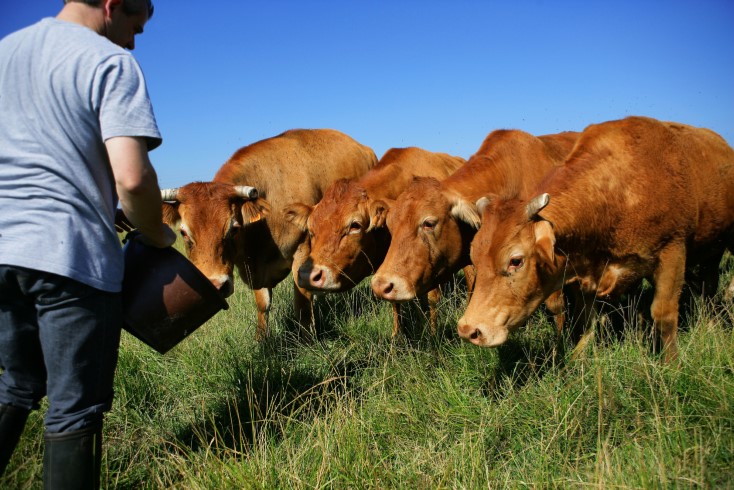
  • For very large animals, like horses and cattle, start with 10 drops. Unless otherwise indicated on the product label, dilution is unnecessary.

Apply oils to yourself or diffuse to introduce animals to essential oils and help them get comfortable.
  • Wear oils around your animals, diffuse in their space, or apply to your hands and let the animal smell them.
  • If your animal is jittery or resistant to essential oils, try applying an oil to yourself and staying near the animal for several minutes so it can get used to the aroma.

Cattle

Once they’re used to essential oils, animals can respond well to topical application.
  • For cats and dogs, paws are a great place to apply essential oils.
  • For hoofed animals, we recommend application on the spine or flanks.
  • Try rubbing oils onto your own hands and then stroking the animal’s fur.
  • For large or hard-to-reach areas, combine essential oils with V-6 Vegetable Oil Complex or water in a spray bottle for easier application.
  • Animal Scents Ointment can be used to seal and protect areas where essential oils have been applied topically.

Essential oils can be administered internally.
  • Some essential oils can be mixed with your animal’s food.
  • For large animals, you can pull out the bottom lip and drop oils directly into the mouth.

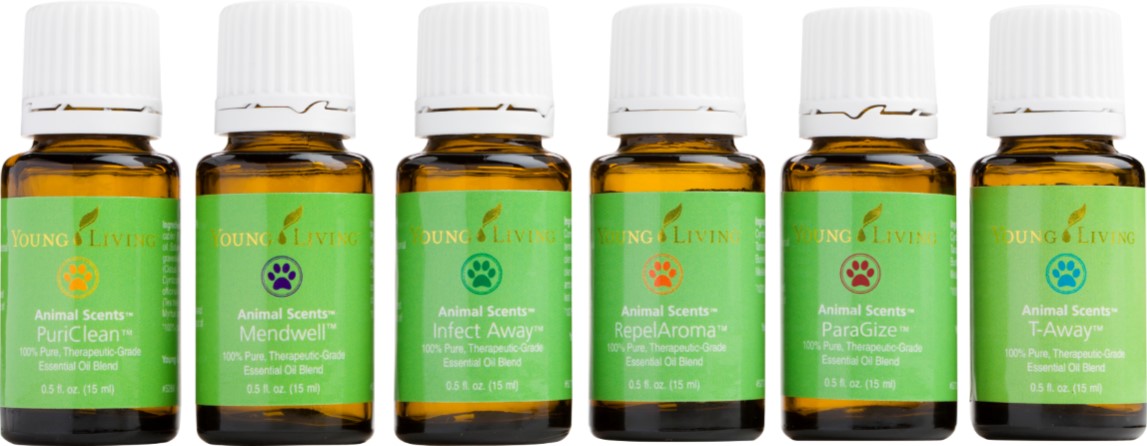
Young Living offers a full line of animal-specific products.

AnimalScents Oils - Young Living

*If your pet or animal has a known health issue, please consult your veterinarian before administering essential oils.

Get started on your amazing essential oils journey at:


No Bones About It: Bones Are Unsafe for Your Dog


The idea that it's natural for dogs to chew on bones is a popular one. However, it's a dangerous practice and can cause serious injury to your pet.
Some people think it's safe to give dogs large bones, like those from a ham or a roast. Bones are unsafe no matter what their size. Giving your dog a bone may make your pet a candidate for a trip to your veterinarian's office later, possible emergency surgery, or even death."
Make sure you throw out bones from your own meals in a way that your dog can't get to them. We suggest taking the trash out right away or putting the bones up high and out of your dog's reach until you have a chance to dispose of them. And pay attention to where your dog's nose is when you walk him around the neighborhood ~ steer him away from any objects lying in the grass.

Here are 10 reasons why it's a bad idea to give your dog a bone:

  1. Broken teeth. This may call for expensive veterinary dentistry.
  2. Mouth or tongue injuries. These can be very bloody and messy and may require a trip to see your veterinarian.
  3. Bone gets looped around your dog's lower jaw. This can be frightening or painful for your dog and potentially costly to you, as it usually means a trip to see your veterinarian.
  4. Bone gets stuck in esophagus, the tube that food travels through to reach the stomach. Your dog may gag, trying to bring the bone back up, and will need to see your veterinarian.
  5. Bone gets stuck in windpipe. This may happen if your dog accidentally inhales a small enough piece of bone. This is an emergency because your dog will have trouble breathing. Get your pet to your veterinarian immediately!
  6. Bone gets stuck in stomach. It went down just fine, but the bone may be too big to pass out of the stomach and into the intestines. Depending on the bone’s size, your dog may need surgery or upper gastrointestinal endoscopy, a procedure in which your veterinarian uses a long tube with a built-in camera and grabbing tools to try to remove the stuck bone from the stomach.
  7. Bone gets stuck in intestines and causes a blockage. It may be time for surgery.
  8. Constipation due to bone fragments. Your dog may have a hard time passing the bone fragments because they're very sharp and they scrape the inside of the large intestine or rectum as they move along. This causes severe pain and may require a visit to your veterinarian.
  9. Severe bleeding from the rectum. This is very messy and can be dangerous. It's time for a trip to see your veterinarian.
  10. Peritonitis. This nasty, difficult-to-treat bacterial infection of the abdomen is caused when bone fragments poke holes in your dog’s stomach or intestines. Your dog needs an emergency visit to your veterinarian because peritonitis can kill your dog.

Talk with your veterinarian about alternatives to giving bones to your dog. There are many bone-like products made with materials that are safe for dogs to chew on.
Always supervise your dog with any chew product, especially one your dog hasn’t had before. And always, if your dog 'just isn't acting right,' call your veterinarian right away!


Friday, June 5, 2015

Ainsworth Pet Nutrition Voluntarily Recalls Five Nutrish® Wet Cat Food Varieties


Recall -- Firm Press Release

FDA posts press releases and other notices of recalls and market withdrawals from the firms involved as a service to consumers, the media, and other interested parties. FDA does not endorse either the product or the company.
 

Ainsworth Pet Nutrition Voluntarily Recalls Five Nutrish® Wet Cat Food Varieties For Potentially Elevated Vitamin D Levels

Contact:
Consumer:
877-650-3486
www.nutrishforpets.com/newsdisclaimer icon

Media:
Steve Joyce
814-724-7710 ext. 4448
Steve.joyce@ainsworthpets.com


FOR IMMEDIATE RELEASE – June 4, 2015 – Ainsworth Pet Nutrition of Meadville, PA is voluntarily recalling five varieties of Rachael Ray™ Nutrish® wet cat food, including Ocean Fish-a-licious, Lip Smackin’ Sardine & Mackerel, Ocean Fish & Chicken Catch-iatore, Tuna Purrfection, and certain lot codes of Paw Lickin’ Chicken & Liver due to potentially elevated levels of vitamin D. Symptoms of excessive vitamin D consumption usually develop within 12-36 hours after ingestion and may include vomiting or diarrhea, increased thirst and urination, and muscle tremors or seizures. Any cat experiencing these symptoms should be taken to a veterinarian immediately.
Two variety packs that contain some of these recalled products (the Chicken Lovers Variety Pack, and the Ocean Lovers Variety Pack) will also be recalled. The recalled products are distributed nationwide. No other Rachael Ray™ Nutrish® products are affected by this recall.
Single PackUnit UPC CodeBest By Dates Thru
PAW LICKIN CHICKEN AND LIVER (2.8 oz)071190007032AUG 17 2015
OCEAN FISH AND CHICKEN CATCH-IATORIE (2.8 oz) 071190007049DEC 1 2016
OCEAN FISH A LICIOUS (2.8 oz) 071190007056DEC 1 2016
TUNA PURRFECTION (2.8 oz)071190007063DEC 1 2016
LIP SMACKIN SARDINE AND MACKEREL (2.8 oz)071190007070DEC 1 2016
Multi Packs - 12 CountUnit UPC CodeBest By Dates Thru
CHICKEN LOVERS VARIETY PACK (12 count pack of 2.8 oz cups)071190007773DEC 1 2016 
OCEAN LOVERS VARIETY PACK (12 count pack of 2.8 oz cups)071190007780DEC 1 2016
The UPC code can be found on the bottom of the cup. The Best By code can be found on the side of the cup.
To date, there have been 11 reports of illness associated with these products.
After conducting a number of product tests, Ainsworth confirmed that the affected products have elevated levels of vitamin D. The high levels result from the natural levels of vitamin D that are found in some of the fish ingredients that were used in these specific formulas.
"At Ainsworth Pet Nutrition and Rachael Ray™ Nutrish®, the safety and quality of our products is our top priority," says Jeff Watters, CEO. "For the time being, we recommend disposing of any of the affected wet cat varieties. Rest assured we have implemented additional operating procedures to prevent an issue like this from occurring in the future. We sincerely apologize to our loyal consumers everywhere."
Ainsworth is working to ensure the removal of all affected products from store shelves. Retailers with affected products are asked to contact 888-943-4218 for additional information.
Consumers with questions about the recall are encouraged to contact Ainsworth’s Consumer Care Team at 877-650-3486 or visit www.nutrishforpets.com/newsdisclaimer icon.
Representatives will be available from 8:00 a.m. – 9:00 p.m. ET Monday thru Friday and 8:00 a.m. – 8:00 p.m. ET Saturday and Sunday.
Vitamin D is important in regulating calcium and phosphorus in a cat’s body. But, when ingested at very high levels, it can lead to serious health issues.
Production of the affected varieties has been suspended and will resume after reformulation.

TIRED OF PET FOOD RECALLS?
Choose Life's Abundance Dog and Cat Food! They have NEVER been recalled and the food is shipped fresh to your door within 4-6 weeks of being made. They have been in business since 1999! Choose a pet food you can trust! This food is only sold online to ensure you receive the freshest food possible. Click Here to order.


Healthypet1
www.PremiumPetFoodStore.com


Monday, May 4, 2015

Protect Your Pet's Health Today with Pet Insurance by Hartville!


What is Pet Insurance?

Pet insurance helps you afford quality veterinary care so you can give your pet the best care possible. Hartville Pet Insurance has 4 increasing levels of protection that can cover your pet for accidents, illnesses, wellness care, ongoing conditions and more.

Why do I need it?

The costs of veterinary care are rising, especially as more sophisticated treatments become available for animals. Hartville Pet Insurance can help you focus more on your pet's care and less on finances.

How does it work?

It's easy! Take your pet to any vet in the US or Canada and pay for the services. Then fill out a simple claim form and mail, fax, or email it with your receipts. You can track the status of your claims conveniently online at the free Member Center.

How much will I get reimbursed?

Hartville Pet Insurance plans reimburse 90% of usual and customary covered charges after a low $100 annual deductible per pet. You can also customize our plans to your budget with additional deductible and co-insurance options.

Why choose us?

You'll enjoy valuable coverage that helps you prepare financially for the unexpected. Plus, we have a 30-day money back guarantee as long as no claims are covered. That way, you can try us out risk-free!

How do I get started?

Just log on HERE, then enter your pet’s name and be sure that Priority Code 7466 is pre-filled in the box.  Click on "Get Started" to see what coverage options are available for your pet. You can then enroll online in minutes or save your quote to finish later.


Saturday, May 2, 2015

The Scoop on Grain-Free Pet Foods


This month, we are talking about finding the perfect pet food that reflects both your expectations and represents the best veterinary science has to offer. In particular, we’ll be taking a closer look at grains in dog and cat foods, addressing the top three concerns of pet parents. Are these concerns valid or are they misrepresentations of reality? The truth may surprise you!
The Belief Grains Are Responsible for Allergies
Food allergies or adverse food reactions are abnormal reactions to ingredients found in everyday foods. Recent estimates indicate that less than 5% of skin diseases in dogs and cats are accurately diagnosed as being caused by a food allergy. Even though the incidence of adverse food reactions remains unclear, a lot of pet parents believe that grains are prime suspects. However, the most commonly identified food allergens among dogs and cats are proteins in beef, dairy, chicken, soy and corn. Food allergies can cause itchy skin alone or even gastrointestinal problems as well.
The place where many pet parents get confused is comparing canine or feline food reactions to celiac disease in humans, which is a heritable autoimmune disease associated with a hypersensitivity to gluten proteins in wheat, barley, and rye. There has been a very rare similar heritable gluten sensitivity described in a small number of dogs with the symptoms being weight loss, weakness, vomiting and diarrhea, but celiac disease and adverse food reactions in companion animals are rare.
The Belief Grains Have No Real Nutritive Value
Whole grains, like the ones used in many of our foods, contain the entire kernel. Whole grains are used in human and pet food because they pack a nutritional punch. Not only are they a good source of carbohydrates, they also contain essential fatty acids, amino acids, dietary fiber, vitamins, minerals, protein and even antioxidants! They add to the nutritional profile of the food, which means that they add to your pet’s nutrition as well. The grains used in our foods meet or exceed the criteria of the European Community, which currently exceed U.S. standards for quality.
The Belief That Pets Can’t Digest Grains
Some pet parents believe that carbohydrates from grains are not easily digested by dogs or cats. Like other mammals, cats and dogs have a metabolic need for carbohydrates in the form of glucose. Glucose fuels many parts of the body, including the brain, nervous system, red blood cells, the kidneys, and the female reproductive organs during pregnancy and lactation. If the diet fails to provide sufficient carbohydrates, the body can manufacture glucose by robbing it from amino acids (the building blocks for protein) and triglycerides (in fat), but this is hardly ideal. Both dogs and cats will utilize glucose from ingested carbohydrates to meet their needs. Additionally, both species have sufficient digestive enzymes to allow for the efficient digestion of properly cooked carbohydrates. We know that not only is the quality of the grains important, but also the manner in which they are cooked. Our foods are prepared in such a way that the grains are broken down during the cooking before they enter the intestines, allowing them to be digested more easily.
So What is the Truth?
The key takeaway from all of these points . . . . you must feed the food that most closely meets your own standards and expectations for your pet kid. After all, you know them better than anyone! For all of you who want the best grain-free option for your companion animal, I’m pleased to tell you that our two latest foods are both grain-free!


Grain-Free Formulas That Are Nutritionally Balanced
Like all our foods, our new grain-free foods offer excellent, balanced nutrition. Rather than relying on grain content, these natural formulas do have carbohydrates such as peas, potatoes and a selection of healthy vegetables in the grain-free dog food. Ideal for all life stages, our newest nutritious foods provide another great option for pet parents who want the best for their dogs and cats. For detailed information about these products, including ingredients, guaranteed analyses and more, visit our site at www.PremiumPetFoodStore.com today.

References
Verlinden A, Hesta M, Millet S, et all. Food allergy in dogs and cats: a review. Crit Rev Food Sci Nutr 2006;46:259-73
Carciofi AC, Takakura FS, de-Oliveira MC, et al. Effects of six carbohydrate sources on diet digestibility and post-prandial glucose and insulin response in cats. J Anim Physiol Anim Nutri 2008;86:2237-46..
Carciofi AC, Takakura FS, de-Oliveira LD, et al. Effects of six carbohydrate sources on dog diet digestibility and post-prandial glucose and insulin response. J Anim Physiol Anim Nutri 2008;92:326-36.
Garden OA, Pidduck H, Lakhani KH, et al. Inheritance of gluten-sensitivity enteropathy in Irish Setters. Am J Vet Res 2000;61:462-8.
Blaza SE, Booles D, Burger IH. Is carbohydrate essential for pregnancy and lactation in dogs? In: Burger IH, Rivers JP, editors. Nutrition of the dog and cat: Waltham symposium No. 7. Cambridge (United Kingdom): Cambridge University Press; 1989. p. 229-42.
Eisert R. Hypercarnivory and the brain: protein requirements of cats reconsidered. J Comp Physiol B 2011;18:1-17.
Westman E. Is dietary carbohydrate essential for human nutrition [letter to the editor] Am J Clin Nutr 2002;75:951-3
Kienzle E. Blood sugar levels and renal sugar excretion after the intake of high carbohydrate diets in cats. J Nutri 1994; 124:2563S-7S.
Thiess S, Becskei C, Tomsa K, et al. Effects of high carbohydrate and high fat diet on plasma metabolite levels and on IV glucose tolerance test in intact and neutered male cats. J Feline Med Surg 2004;6:207-18.
Laflamme D, Izquierdo O, Eirmann L, Binder S. Myths and misperceptions about ingredients used in commercial pet foods. Vet Clin Small Anim 2014; 44:689-98.
Hore P, Messer M. Studies on disaccharidase activities of the small intestine of the domestic cat and other mammals. Comp Biochem Physiol 1968;24: 717-25.
Hoenig M, Jordan ET, Glushka J, et al. Effects of macronutrients, age, and obesity on 6- and 24-h postprandial glucose metabolism in cats. Am J Physio Regul Integr Comp Physiol 2011;301:R1798-807
Association of American Feed Control Officials. Official publication 2013. Champaign, IL: Association of American Feed Control Officials, Inc; 2013.
Thompson A. Ingredients: where pet food starts. Top Companion Anim Med 2008;23:127-32.